
When your entire harvest season depends on a single machine not breaking down—maintenance is no longer just “important,” it’s business-critical. For modern agribusinesses, managing a fleet of tractors, sprayers, and harvesters without a digital system is like flying blind. Spreadsheets, paper logs, and last-minute phone calls might have worked a decade ago, but today, they lead to delays, costly breakdowns, and a whole lot of stress.
That’s where CMMS—Computerized Maintenance Management Systems—come in. From automatic service reminders to real-time machine data, these tools help agricultural teams stay ahead of failure, not just react to it.
And yes, some of the world’s biggest agri-tech brands are already doing this. So, how does it work, and what can your business learn from them? Let’s dig in.
How CMMS Transforms Equipment Maintenance on the Farm
CMMS isn’t just another buzzword—it’s a practical tool that helps farmers and service teams keep machines running when it matters most. Here’s what it brings to the table:
📅 Automated Maintenance Scheduling
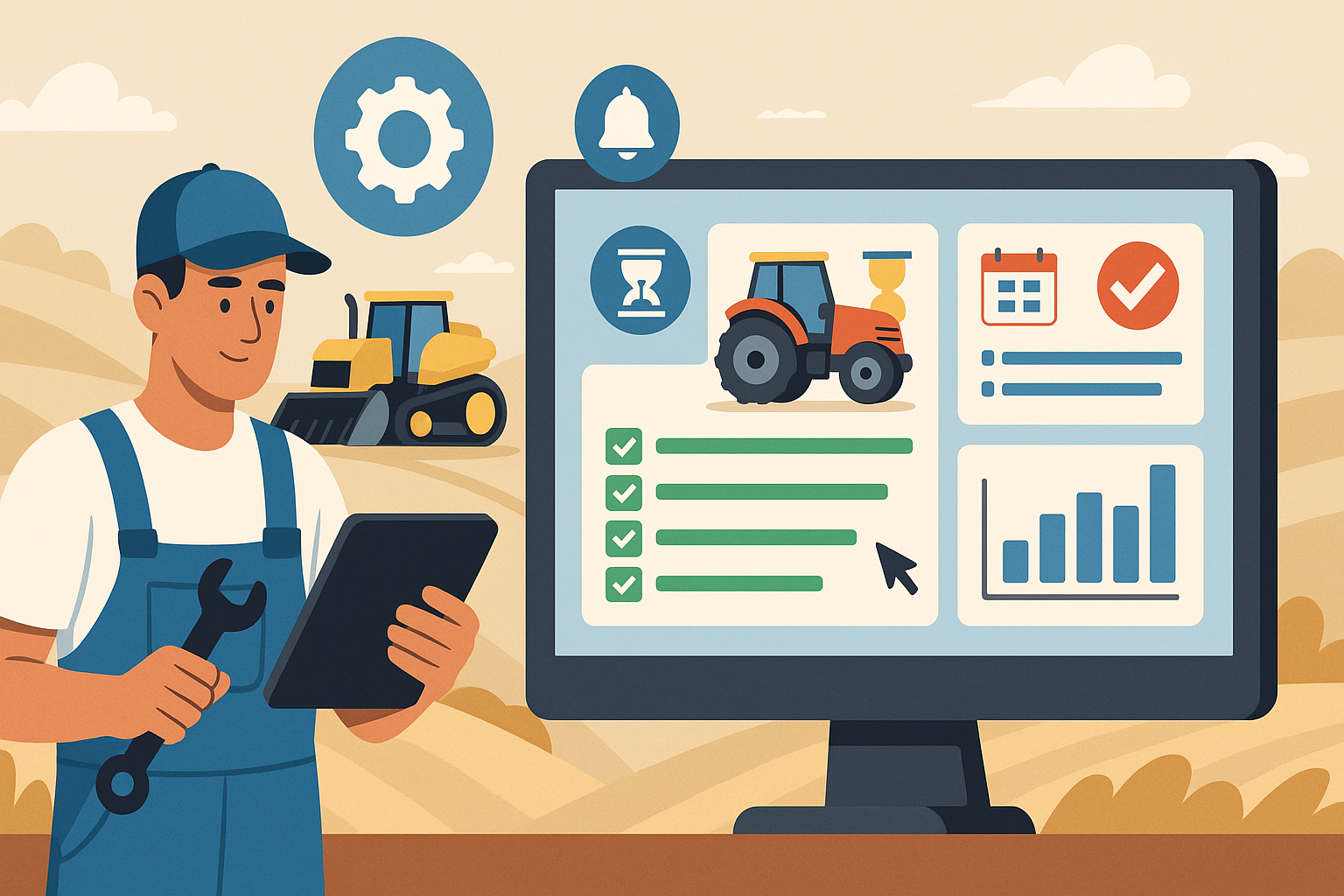
No more guesswork. CMMS tracks engine hours, mileage, or calendar dates and automatically creates maintenance tasks based on real usage. Need an oil change every 500 hours? The system will remind you—before it’s too late.
🔔 Smart Reminders for Service Teams
Mechanics and field techs receive timely alerts via desktop or mobile, complete with task details, instructions, and a service checklist. That means fewer missed inspections, and no more reactive fixes in the middle of harvest.
📘 Digital Maintenance History
Every machine gets its own digital logbook. From a major repair last season to a minor filter change last week—it’s all there, searchable, and always up to date.
🔗 Link to Parts and Inventory
Many CMMS platforms connect to your parts inventory. That way, when a service task is created, the system can reserve the right parts automatically—reducing downtime caused by missing components.
💡 Example: AGCO (Fendt, Massey Ferguson)
AGCO uses AGCO Connect, a system that combines telematics with maintenance tracking. Dealers and customers receive alerts when service is due and can view machine diagnostics remotely—helping prevent breakdowns before they happen.
What’s in It for Farmers? Real Benefits of CMMS in Agriculture
Digital maintenance isn’t just about making life easier—it’s about protecting revenue, saving time, and keeping operations moving when every hour counts. Here’s what agri-businesses get when they adopt a CMMS:
⏱️ Less Downtime
Scheduled servicing and early warnings help catch issues before they turn into failures. That means fewer machines sitting idle in the middle of planting or harvest season.
💰 Lower Repair Costs
Fixing a worn belt before it snaps is a lot cheaper than replacing an entire drive system. CMMS helps shift maintenance from reactive to preventive—saving thousands in unexpected repairs.
🧾 Full Service Transparency
With every inspection, repair, and oil change logged digitally, you can see exactly what was done, when, and by whom. This is gold for warranty claims, resale value, and internal reporting.
📊 Smarter Fleet Decisions
Over time, CMMS data reveals which machines are costing more to maintain, which parts fail most often, and where bottlenecks happen. This insight helps managers make better purchasing and replacement decisions.
💡 Example: Trimble Ag Software
Trimble integrates maintenance tracking into its farm management platform. Users can log repairs, monitor usage trends, and schedule recurring service tasks—all while keeping other farm operations in view.
What It Looks Like in Practice: A Day in the Life of Digital Maintenance
Let’s break it down—what does CMMS actually look like when it’s working in the field? Here’s a simple real-life scenario:
🚜 Use Case: Preventive Service on a New Holland Tractor
- Tracking usage:
The CMMS is synced with the tractor’s telematics system. It knows the machine has logged 480 engine hours and counting. - Triggering a task:
At 490 hours, the system auto-generates a service task: a 500-hour maintenance check is due soon. It includes a predefined checklist — oil change, filter inspection, hydraulics check. - Sending reminders:
A push notification lands in the field technician’s mobile app. He reviews the task, location, and required parts before heading out. - Performing the work:
After completing the maintenance, the tech logs photos, notes, and used parts directly in the app. The machine’s digital record updates instantly. - Manager’s view:
Back at HQ, the fleet manager sees the task completed, the costs logged, and the machine marked “ready for operation.”
💡 Example: John Deere – Operations Center
Through its Operations Center platform, John Deere enables farmers to monitor equipment health, receive maintenance alerts, and sync tasks with local dealers. It’s a real-world CMMS in action—built into the machine.
Who Needs This Right Now?
Not every farm is the same—but if your operation runs on machines, chances are you’re already feeling the need for smarter maintenance. CMMS isn’t just for industry giants. In fact, the more moving parts (literally) you have, the more valuable it becomes.
✅ Large Agribusinesses with Mixed Fleets
If you operate dozens or hundreds of machines—from combines to sprayers—CMMS helps you centralize service data, reduce chaos, and keep the entire fleet productive.
✅ Agri-Service Providers & Contractors
Custom farming and equipment rental businesses can’t afford downtime. A CMMS gives you full visibility into machine condition, upcoming service needs, and repair history — across clients and locations.
✅ OEMs and Dealers
Manufacturers and dealerships offering after-sales service can use CMMS to manage customer equipment records, schedule field techs, and build loyalty through fast, predictable support.
✅ Leasing & Equipment Finance Companies
Want to protect asset value and ensure machines are properly maintained during leases? CMMS helps track usage and service compliance, reducing risk and improving resale potential.
⚡ If you’re still managing your fleet with spreadsheets and sticky notes, this might be the moment to level up.
From Breakdown Panic to Maintenance Peace of Mind
In agriculture, timing is everything. A broken-down tractor in the middle of harvest isn’t just frustrating—it’s lost yield, lost revenue, and lost time you’ll never get back. That’s why more and more ag businesses are investing in digital maintenance tools like CMMS.
It’s not about replacing people—it’s about giving your team the visibility, structure, and alerts they need to stay ahead of problems. Whether you’re managing 10 machines or 300, a well-implemented CMMS can turn a chaotic maintenance process into a smooth, proactive system.
And the best part? You don’t need to be AGCO or John Deere to start. The tools are here. The benefits are real. The only question is—how long can you afford to keep guessing?
Want to see how a CMMS could work for your fleet?
At LaSoft, we build custom service platforms and equipment maintenance tools tailored to the real workflows of agri-businesses.
From mobile technician apps to full-scale maintenance dashboards—we’ve got you covered.